

Table of Contents
- Why Proper Washing Matters for Graphic Tees
- What You'll Need Before Washing
- Step 1: Turn Your Graphic Tee Inside Out
- Step 2: Choose the Best Laundry Detergent for Graphic Tees
- Step 3: Select Water Temperature and Wash Cycle
- Air Drying vs Machine Drying Graphic Tees
- How to Remove Wrinkles from Graphic Tees
- Storage and Long-Term Care Tips
- Frequently Asked Questions
Last Updated: September 3, 2026
Why Proper Washing Matters for Graphic Tees
Graphic tees are vulnerable to damage from improper care. A single careless wash can crack the print, fade vibrant colors, or shrink the garment. Most print deterioration is preventable with the right approach.
Graphic tees require understanding what the print and fabric need. Proper washing extends garment life and preserves both the artwork and your investment.
Most people treat all t-shirts the same way, using hot water and machine drying. Graphic tees demand a different approach. This guide covers every step from preparation to storage.
What You'll Need Before Washing
Essential supplies:
- Mild detergent (specifically formulated without optical brighteners or harsh chemicals)
- Cold water (hot water accelerates fading and print damage)
- A mesh laundry bag or wash bag (protects the garment from agitation and friction)
- A soft brush or cloth for pre-treating stains (optional but helpful)
Optional but recommended:
- Color-safe detergent (helps preserve vibrant inks longer)
- Stain removal products designed for delicate fabrics
- A separate hamper for graphic tees (keeps them away from heavy items that cause friction)
Optical brighteners, bleach, and harsh surfactants break down fibers and fade colors. For graphic tees, use a gentle formula without these ingredients, as they degrade screen print and direct-to-garment inks.
Cold water preserves colors and prevents shrinkage (the FTC). Warm or hot water accelerates fading and shrinkage, stressing the print. Always use cold water for graphic tees.
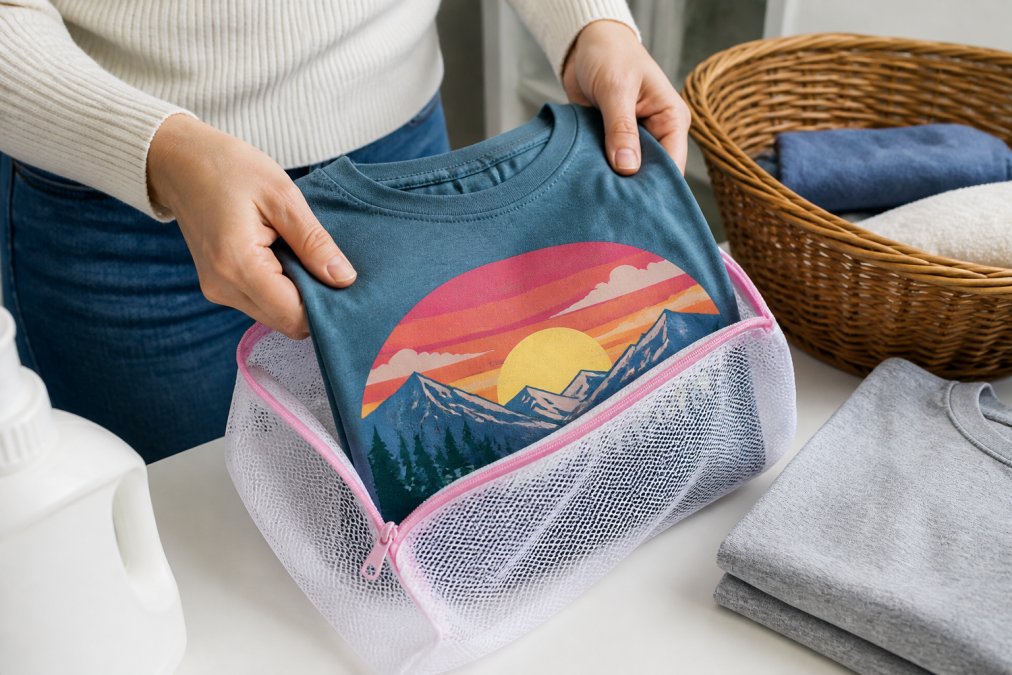
A mesh laundry bag protects your graphic tee from friction, one of the biggest culprits in print damage. It creates a barrier that minimizes contact without restricting water flow.
Step 1: Turn Your Graphic Tee Inside Out
Turning the shirt inside out is the single most important step. It protects the printed side from direct contact with water, detergent, agitation, and friction.
When the print faces inward, the blank back absorbs mechanical stress, protecting the ink from the washing machine's tumbling action. This step dramatically reduces fading and cracking.
Before turning the shirt inside out, inspect the print for loose areas or damage. If you spot peeling or cracking, hand wash instead of machine washing.
Turn the shirt inside out carefully without folding or creasing the print. Never bunch it tightly before washing, as pressure can damage the print.
Step 2: Choose the Best Laundry Detergent for Graphic Tees
The best detergent for graphic tees is formulated without optical brighteners, bleach, or harsh surfactants, which clean aggressively and work against color preservation.
Optical brighteners coat fibers with fluorescent compounds that break down dyes and inks over time, causing fading (peer-reviewed research). Use detergents that clean through gentle chemical action instead.
Look for detergents labeled "color-safe" or "delicate fabric." Read ingredient lists carefully and avoid bleach, optical brighteners, and heavy-duty enzymes.
Use the minimum amount of detergent recommended. Excess detergent leaves residue that dulls colors and makes prints look faded.
For new graphic tees, use even less detergent. New prints release excess ink, and heavy residue traps it on the fabric, dulling colors.
Step 3: Select Water Temperature and Wash Cycle
Cold water is non-negotiable. Hot or warm water accelerates fading, causes shrinkage, and damages inks. Cold water cleans effectively while protecting the garment.
A gentle cycle minimizes agitation and friction, the mechanical forces that crack prints. Heavy-duty cycles stress graphic tees. Always use a delicate or gentle cycle.
Use the "delicate" or "gentle" setting on your washing machine. If unavailable, use the shortest cycle on the lowest agitation setting.
Cold water plus gentle cycle is the best combination for preserving graphic tees. The extra time is worth avoiding damage.
For delicate or vintage prints, hand wash: fill a sink with cold water and mild detergent, submerge for 10-15 minutes, gently agitate without wringing, and rinse thoroughly. It's the safest option for irreplaceable pieces.
Air Drying vs Machine Drying Graphic Tees
Machine drying damages inks, causes shrinkage, and accelerates cracking. Air drying is always the better choice.
Machine dryers use heat that fades dyes, shrinks fibers, and warps screen print adhesive (peer-reviewed research). Even low-heat settings cause cumulative fading and deterioration.
Air dry in a shaded, well-ventilated area. Lay flat on a clean surface or hang on a clothesline. Avoid direct sunlight, which causes fading.
Flat drying is gentler than hanging. Lay the shirt flat on a clean towel or drying rack to prevent stretching and stress on the print.
If you must use a machine dryer, use the lowest heat or air-fluff setting. Even low heat accelerates fading over time.
How to Remove Wrinkles from Graphic Tees
Let wrinkles air out by hanging the shirt loosely in a humid environment. This requires patience but causes zero damage.
Use a steamer rather than an iron. Hold it 6-8 inches away and work on the back side of the shirt, keeping the print away from direct heat.
If using an iron, turn the shirt inside out, use the lowest heat, and iron only the back side with a thin cloth buffer. This carries more risk than steaming.
Prevent wrinkles by folding or hanging graphic tees immediately after air drying, before wrinkles set in.
Storage and Long-Term Care Tips
How you store graphic tees affects their longevity as much as washing. Proper storage prevents wrinkles, protects the print, and preserves the garment.
Fold graphic tees rather than hanging them. Hanging stretches the neckline and armholes. Folding distributes weight evenly and prevents stress.
Store in a cool, dark place away from direct sunlight and damp environments. UV light and moisture cause fading and damage.
Separate stacked graphic tees with acid-free tissue paper or cotton cloth to prevent ink transfer and friction damage.
Keep graphic tees away from heat sources and temperature fluctuations. A stable, cool environment preserves fabric and print.
Rotate your graphic tees regularly to prevent excessive wear on individual pieces and allow time for drying and rest between wears.
For rarely worn, vintage, or limited-edition pieces, use breathable garment storage bags. Avoid plastic bags, which trap moisture.
| Storage Practice | Benefit | Best For |
|---|---|---|
| Folding instead of hanging | Prevents shoulder stretching and neckline distortion | All graphic tees |
| Cool, dark storage location | Prevents UV fading and heat damage | Long-term preservation |
| Separating with tissue paper | Prevents ink transfer and friction damage | Stacked collections |
| Regular rotation | Distributes wear evenly across collection | Frequently worn tees |
| Breathable storage bags | Protects from dust and light without trapping moisture | Rare or vintage pieces |
Washing graphic tees correctly is an investment in the longevity of your wardrobe. Every step, from turning the shirt inside out to choosing the right detergent to air drying, protects the print and preserves the colors that make these pieces special. Follow this guide, and your favorite designs will stay vibrant and crack-free for years. Ready to invest in graphic tees that deserve proper care? Shop Women's Tees and discover designs worth preserving.
Frequently Asked Questions
Should graphic tees be washed inside out?
Yes, always wash graphic tees inside out. This protects the print from direct friction with other garments and the washing machine drum. Inside-out washing significantly reduces print cracking and fading by minimizing agitation against the graphic surface. It's the single most effective step to extend the life of your graphic tee's design.
What's the best laundry detergent for graphic tees?
Use a mild detergent without optical brighteners or bleach. Look for detergents labeled as gentle or designed for delicate fabrics. Avoid products with harsh chemicals that can break down the print adhesive. Cold-water detergents work well since you'll be washing in cold water anyway. Liquid detergents often dissolve better in cold water than powders.
Is it okay to put graphic tees in the dryer?
Machine drying with heat can damage graphic tee prints through friction and thermal stress. Air drying is the safest option, lay flat or hang on a clothesline away from direct sunlight. If you must use a dryer, use the lowest heat setting or air-dry cycle. High heat accelerates print cracking and can cause shrinkage in the garment itself.
How do you remove stains from graphic tees without damaging the print?
Pre-treat stains on the blank side of the tee before washing. For organic stains, rinse with cold water first, then apply a gentle stain remover away from the print. Avoid bleach and harsh peroxide products. For stubborn stains, soak the garment in cold water with mild detergent for 30 minutes. Test any stain treatment on an inconspicuous area first.
This article was written using GrandRanker