

Table of Contents
- Teamshirts vs Cotton Bureau: What This Comparison Covers
- Teamshirts vs Cotton Bureau at a Glance
- Teamshirts Reviews: Strengths, Weaknesses, and What Buyers Say
- Cotton Bureau Reviews: Strengths, Weaknesses, and What Buyers Say
- Graphic T-Shirt Quality and Fit: What to Check on Both Platforms
- Graphic Tee Washing and Care: Making Prints Last
- Pricing, Fees, Shipping, and Creator Earnings Compared
- Which Platform Fits Your Needs? A Use-Case Guide
- Frequently Asked Questions
Last Updated: October 9, 2026
Teamshirts vs Cotton Bureau: What This Comparison Covers
Choosing between print-on-demand platforms usually comes down to one question: do you want low prices or do you want a marketplace that treats your design like art? A teamshirts vs cotton bureau comparison sits right at that fork in the road. One platform is built for volume and budget. The other is built for curation and creator credibility.
This guide from Shine Bright Shirts breaks down both services side by side, using the criteria that actually matter to buyers and sellers: garment quality, fit, print durability, pricing structure, creator earnings, and customer support. We sell graphic tees ourselves, so we pay close attention to how these platforms handle fabric, sizing, and the details that show up after the third wash.
Below, we'll show you exactly where each platform wins, where it falls short, and which one fits your situation. But first, here's what most comparisons get wrong: they treat these two services as direct substitutes when they serve very different goals.
Teamshirts vs Cotton Bureau at a Glance
Teamshirts is a bulk-focused custom apparel service, while Cotton Bureau is a curated print-on-demand marketplace for independent designers. That single distinction shapes everything else, from minimum order quantities to how much control a creator keeps over their work.
Here is how the two platforms stack up on the factors buyers and sellers ask about most:
| Factor | Teamshirts | Cotton Bureau |
|---|---|---|
| Primary focus | Bulk custom orders | Curated designer marketplace |
| Best for | Teams, events, groups | Artists, small brands |
| Design approval | Standard review | Curated selection |
| Creator earnings | Order-based | Royalty per sale |
| Audience ownership | Limited | Creator keeps audience |
| Product range | Broad basics | Curated graphic tees |
Neither platform is objectively better. They solve different problems, and the right choice depends on whether you are ordering twenty shirts for a walkathon or launching a design you want to sell for years.
Teamshirts Reviews: Strengths, Weaknesses, and What Buyers Say
Teamshirts reviews tend to focus on one theme: it is easy to order a lot of shirts quickly.
The weaknesses show up in the details. A common complaint in Teamshirts reviews is that the design tools feel basic and the artwork approval process can be rigid. If a design needs a small adjustment, the back-and-forth can slow down a tight deadline.
What most guides miss is that Teamshirts is not trying to be a design marketplace. It is a production service. If your artwork is finished and your sizes are settled, it does the job. If you want feedback on a design or a curated storefront, you will feel the limits quickly.
Cotton Bureau Reviews: Strengths, Weaknesses, and What Buyers Say
Cotton Bureau reviews usually highlight design quality and the feeling that you are buying something considered, not mass-produced. The platform curates submissions, so the product listing you see has passed a review, and the artwork tends to be sharper and more original than what you find on open marketplaces.
Sellers appreciate that they keep their audience and earn a royalty on each sale. That matters if you are building a following around your designs rather than just fulfilling a one-time order.
The trade-offs are real. Cotton Bureau reviews often note that the approval process is selective, so not every design gets accepted. Turnaround can be slower than a bulk production service, and the product range is narrower. If you need forty matching shirts in three colors by next week, this is not the platform for that job.
Graphic T-Shirt Quality and Fit: What to Check on Both Platforms
Graphic t-shirt quality and fit come down to specifications you can verify before you buy: fabric weight, fabric content, print method, and how the cut sits on a real body. Most comparison articles skip the specs and jump straight to opinions.
Fabric weight. Fabric weight is measured in ounces per square yard (oz/yd²). The common ranges you will see:
- Lightweight: roughly 4.0 to 4.5 oz/yd². Breathable, drapes loosely, best for warm weather. Thinner fabric shows print detail less crisply.
- Midweight: roughly 5.0 to 6.0 oz/yd². The standard for most graphic tees. Holds shape, holds print detail, works year-round.
- Heavyweight: roughly 6.5 oz/yd² and up. Structured, durable, slower to show wear. Can feel stiff until broken in.
A bulk production service typically stocks a broad range across these weights, which is useful when a group wants matching shirts in different cuts.
Fabric content. 100% cotton feels softer over time and takes screen printing well, but it can shrink on a first hot wash. Cotton-poly blends resist shrinking and hold color longer, though they feel less soft against the skin.
Print method. This is the spec most buyers ignore and later regret.
- Screen printing: ink is pushed through a mesh screen. Durable, vibrant on light and dark fabric, cost-effective at volume. Best for bulk orders.
- Direct-to-garment (DTG): ink is printed directly onto the shirt. Good for detailed, multi-color designs and small runs. Can fade faster on dark fabric and may feel slightly stiff at first.
- Heat transfer and vinyl: a printed or cut film is pressed onto the shirt. Crisp edges, but prone to cracking if washed hot or dried on high.
A bulk service is usually built around screen printing because it scales. A curated marketplace often uses DTG or a mix, because it produces on demand.
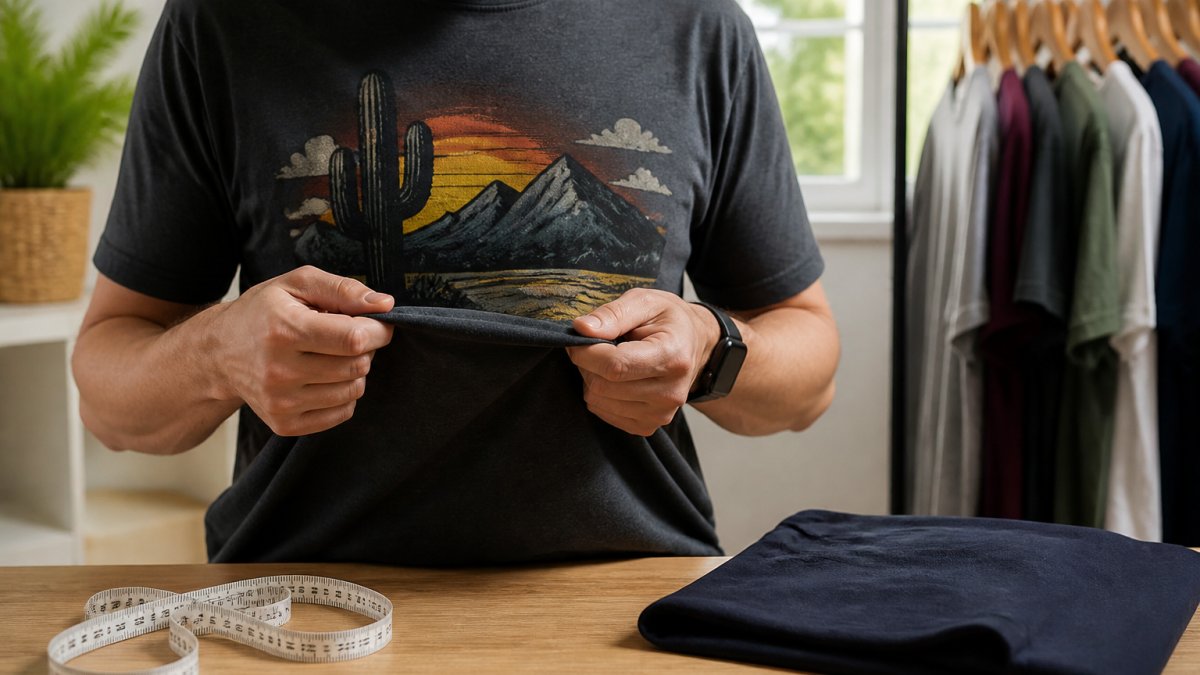
Fit and sizing. Size charts are not standardized across brands, and a medium from one blank can fit like a large from another. Before a group order:
- Measure a shirt you already own that fits well (chest, body length, sleeve length)
- Compare those numbers to the platform's size chart, not to a generic S/M/L label
- Read reviews that mention body type, height, and whether the shirt runs long or short in the body
- Order one sample in your least common size before committing to a full run
What to check on each platform:
- Teamshirts: confirm the blank brand and weight for each garment type, and ask which print method applies to your order. Broad basics mean more sizing options, but quality can vary between garment lines.
- Cotton Bureau: the curated model means fewer blanks, so quality is more consistent, but sizing options are narrower. Confirm the blank weight and print method on the specific listing.
Graphic Tee Washing and Care: Making Prints Last
Graphic tee washing and care decide whether a print looks sharp after a year or cracks after a month. The single biggest mistake is heat. Hot water and a hot dryer are what break down print adhesives and fade ink.
Follow these habits to protect the print:
- Wash inside out in cold water
- Skip fabric softener, which coats the print
- Tumble dry low or hang to dry
- Avoid ironing directly on the graphic
- Turn the shirt inside out before storing if space is tight
The same care routine works for shirts from either platform, because the enemy is heat and friction, not the brand. If a print cracks early, the cause is usually the dryer, not the platform. Treat the shirt well and a good print will hold its detail for years.
Pricing, Fees, Shipping, and Creator Earnings Compared
Pricing is where these two platforms stop looking alike. The structures are fundamentally different, and understanding the mechanics matters more than memorizing today's numbers, because both platforms adjust rates regularly.
How Teamshirts prices: Teamshirts uses tiered volume pricing. The per-unit cost drops as quantity rises, and the tiers are typically published on the product page.
How Cotton Bureau prices: Cotton Bureau operates on a retail-plus-royalty model. The buyer pays a listed retail price for the shirt, and the designer earns a royalty on each sale.
What to verify before you commit:
- Whether the quoted price includes printing, or whether setup fees are added at checkout
- Whether taxes and shipping are calculated before or after any volume discount
- For creators: the minimum payout threshold, the payout schedule, and whether royalties are paid on returns
- For buyers: whether a bulk quote is locked once issued, or subject to change if garment stock shifts
Shipping and delivery: Both platforms ship within the United States, but timelines differ by production model.
Returns: Return policies differ by platform and by whether the item was custom-printed.
Customer support: Both offer email-based support, and response times vary with order volume.
Which Platform Fits Your Needs? A Use-Case Guide
The right platform depends entirely on what you are trying to do. Here is how we would decide:
- Community walks and team events: Choose a bulk-focused service like Teamshirts when you need matching apparel in volume and your artwork is ready.
- Independent designers building a brand: Choose a curated marketplace like Cotton Bureau when you want royalties and to keep your audience.
- Families ordering for several body types: Prioritize platforms with broad sizing and clear size charts, and order samples first.
- Gift shoppers wanting something distinctive: Look for curated, artist-designed apparel rather than generic bulk options.
For readers who want stylish, comfortable graphic tees for the whole family without the bulk-order minimums, we built Shine Bright Shirts around exactly that need. Our curated collection spans classic solids and bold graphics for men, women, and kids, with designs chosen for comfort and everyday wear. You can browse the full range and find pieces that fit your style and your family.
Whichever platform you lean toward, the deciding factor is rarely the logo on the label. It is whether the garment fits, the print lasts, and the process matches your goal. If you want comfortable, artist-designed tees for the whole family without the guesswork of bulk ordering, Shine Bright Shirts is built for you.
Frequently Asked Questions
Which brand has the best cotton shirts?
There is no single best brand, but you can judge cotton shirts by fabric weight, cotton type, and construction. Look for 100% cotton or cotton-rich blends, a weight between 4.5 and 6.5 oz, and double-stitched hems. Both Teamshirts and Cotton Bureau offer solid options, but Cotton Bureau tends to lean toward premium blanks while Teamshirts provides a wider range at various price points. Always check the product description for these details before ordering.
How do Teamshirts and Cotton Bureau compare for fit and fabric?
Teamshirts offers a broad selection of garment types and fits, from basic tees to hoodies and tank tops, with standard unisex sizing. Cotton Bureau focuses on a curated set of premium blanks, often with a softer hand feel and more consistent sizing. If you need variety and size range for a group, Teamshirts may be easier. If you prioritize fabric softness and a tailored fit, Cotton Bureau often has the edge. Ordering a sample is the best way to confirm fit before a large purchase.
What should I check before ordering a graphic T-shirt online?
Before ordering, review the fabric content and weight, the size chart with actual measurements, the print method (screen print, DTG, or sublimation), and the return policy. Check customer reviews for notes on shrinkage and fit. For graphic tees, look at how the design is placed and whether the print is described as durable. Also confirm shipping times and costs, especially if you need shirts for an event. A quick check of these details prevents most ordering mistakes.
How can I tell whether a graphic T-shirt will hold up after washing?
Look for details like double-stitched seams, a weight of at least 5 oz, and a print method suited to the design. Screen-printed graphics generally last longer than some direct-to-garment prints, but quality varies. Check customer reviews for mentions of fading or cracking. To extend life, wash inside out in cold water and tumble dry low or hang dry. Following graphic tee washing and care instructions can keep prints sharp for years.