

Table of Contents
- Set a Realistic Clothing Budget and Stick to It
- Identify Your Family's Clothing Needs Before You Shop
- How to Measure for Clothing Sizes Accurately
- Online Clothing Size Chart Tips and Fit Verification
- How to Choose Soft T-Shirt Fabric and Check Material Quality
- Family Matching Shirts: Building Coordinated Outfits Across Ages
- Understand Shipping, Returns, and Exchange Policies Before Purchasing
- Frequently Asked Questions
Last Updated: October 5, 2026
Set a Realistic Clothing Budget and Stick to It
Buying family clothing online works best when you set a realistic clothing budget covering everyone in your household, then stick to it.
Calculate what you can spend each month or season based on actual needs, and write down a target number. Divide it among family members: a growing child needs more frequent replacements than an adult, and an office worker needs different items than someone who works from home.
Here's how to stay on track:
- List each family member and their clothing needs
- Assign a dollar amount to each person
- Add items to your cart and review the total against your budget
- Remove items if you're over budget, or use discount codes and sales
At Shine Bright Shirts, we help families find quality pieces at fair prices. Our youth tees like the Youth Karate Kick and Youth Gorilla Love are designed for comfort and style.


Identify Your Family's Clothing Needs Before You Shop
The second step in buying family clothing online is to identify exactly what your family needs. Make a list before you browse, considering each person's lifestyle: school, work, sports, and local weather.
Create a clothing needs list for each person:
- Daily wear for school or work
- Weekend casual clothes
- Sleepwear and undergarments
- Seasonal items (winter coats, summer shorts)
- Special occasion outfits
- Athletic or activity-specific clothing
- Comfortable loungewear
With a list, you can search for specific items instead of getting distracted by trendy pieces, which keeps spending focused and prevents impulse buys.
How to Measure for Clothing Sizes Accurately
Taking accurate body measurements is one of the most important steps in buying family clothing online, since guessing leads to poor fits and returns. Use a soft measuring tape, measure over light clothing or directly on skin, and have someone help with hard-to-reach areas like your back.

Here are the key measurements to take:
- Chest/Bust: Measure around the fullest part of your chest, keeping the tape snug but not tight
- Waist: Measure around your natural waistline, where your pants normally sit
- Shoulder width: Measure from the tip of one shoulder to the tip of the other
- Sleeve length: Measure from the center back neck, across your shoulder, down your arm to your wrist
- Shirt length: Measure from the back of your neck down to where you want the shirt to end
- Inseam: Measure from your inner thigh down to your ankle (for pants)
Measure children while they stand still and relaxed, and remeasure every few months since kids grow quickly. Keep all measurements in a phone note or document, since brands cut clothes differently and measurements are more reliable than sizes.
Online Clothing Size Chart Tips and Fit Verification
Every online retailer has a size chart, and using it is the most important step in buying family clothing online successfully. Before adding anything to your cart, find the chart for that specific item, usually near the product photos or in a tab labeled "Size Guide" or "Measurements." Compare your measurements to the chart, matching the row for chest, sleeve length, or whatever matters most. If you're between sizes, read the description, since some items run large or small.
Check for fit notes in the product description. Look for phrases like:
- "Runs large" or "Runs small"
- "True to size"
- "Relaxed fit" or "Slim fit"
- "Pre-shrunk" or "May shrink"
Read customer reviews for fit feedback. If several reviewers say a shirt runs small, size up.
| Measurement | Size Chart Column | Your Measurement | Match? |
|---|---|---|---|
| Chest | 38-40 inches | 39 inches | Yes |
| Sleeve | 32-33 inches | 32.5 inches | Yes |
| Length | 28-29 inches | 28 inches | Yes |
When everything matches, you're ready to buy. If nothing lines up, contact customer service before ordering.
How to Choose Soft T-Shirt Fabric and Check Material Quality
Fabric determines whether a shirt becomes a family favorite or sits unworn. When buying for multiple people, material quality affects comfort, longevity, and laundry care, so a few key specifications help you compare items without relying on marketing language.
Start with fiber content. The product description should list percentages. Common options include:
- 100% cotton: Breathable, soft, and easy to wash. Expect some shrinkage unless the item is pre-shrunk. Ring-spun cotton is softer and more durable than standard carded cotton because the fibers are twisted more tightly.
- Cotton-polyester blends: Typically 50/50 or 60/40. These resist shrinking and wrinkling better than pure cotton but may feel less breathable. They hold up well for kids who play hard and adults who want low-maintenance care.
- Tri-blend (cotton-polyester-rayon): Very soft with a vintage feel. Rayon adds drape but can pill over time if washed roughly. Best for casual wear, not heavy activity.
- Performance fabrics (polyester-spandex): Moisture-wicking and stretchy. Good for athletic wear or sensory-sensitive individuals who prefer smooth textures. They tend to hold odors if not washed promptly.
Check fabric weight.
Evaluate durability signals. Look for these details in the description or reviews:
- Double-needle stitching at hems and sleeves, resists tearing.
- Shoulder-to-shoulder taping, prevents stretching at the neckline.
- Pre-shrunk or garment-dyed, reduces surprise shrinkage after the first wash.
- Side seams, indicate a more tailored cut; tubular shirts without side seams may twist after washing.
Read care instructions before buying. Some fabrics require cold wash and hang dry. For a busy household, prioritize items that can be machine washed warm and tumble dried low; cotton blends handle this better than pure cotton or rayon.
Watch for pilling and fading. Reviews mentioning "pilled after two washes" or "color faded quickly" are red flags. Ring-spun cotton and tighter knits resist pilling better than open-weave fabrics.
Consider sensory needs. Some children and adults are sensitive to tags, seams, or rough textures. Flatlock seams, tagless labels, and brushed cotton interiors reduce irritation. If anyone in your family has sensory sensitivities, prioritize these features over fashion details.
Weigh cost per wear, not just price. A slightly more expensive shirt that keeps its shape and color through fifty washes costs less per wear than a cheap shirt that pills after five.
Family Matching Shirts: Building Coordinated Outfits Across Ages
Matching or coordinated outfits make family photos special and help younger kids feel connected to their siblings.
Start with a color or theme. Neutrals like black, white, or gray flatter all ages, or choose a theme such as animals, sports, or positive messages that appeals to everyone.
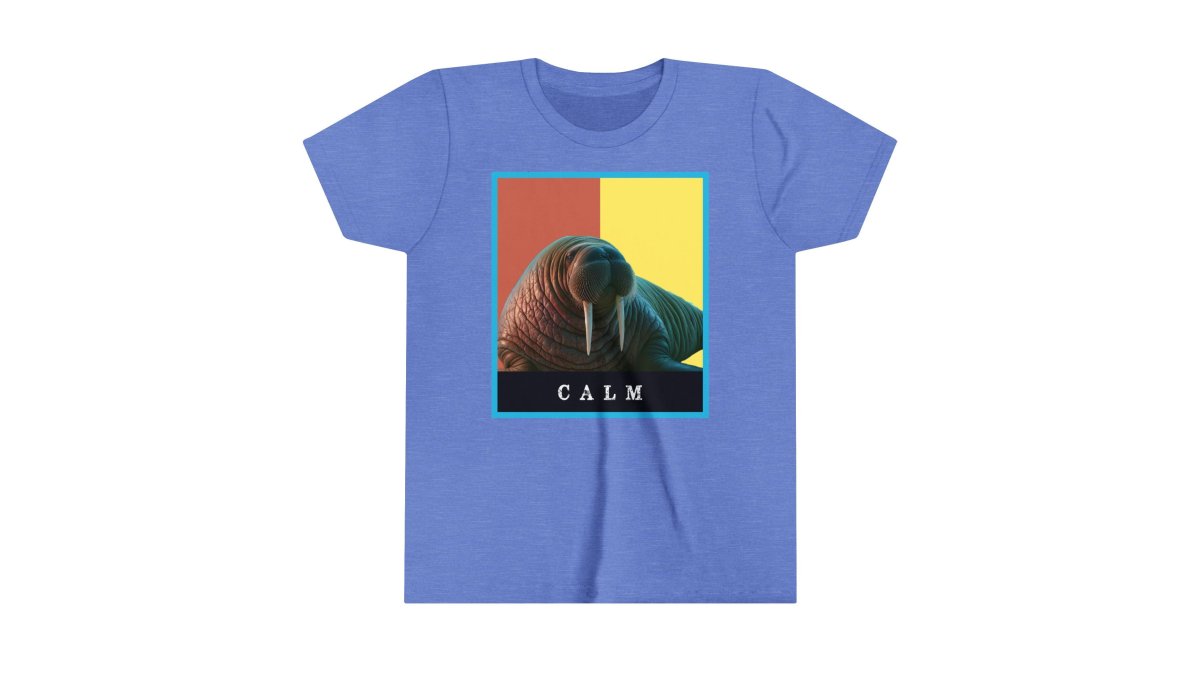
Look for the same design in different sizes. The Youth Walrus Calm and Youth Panda designs work for coordinated family looks while letting each person express their own style.
Build outfits around one key piece. Start with a matching shirt, then add different bottoms or accessories for each person. This keeps things coordinated without looking forced.
Consider growth when buying for kids. Coordinated outfits will need replacing before long, so budget for replacements or buy slightly larger sizes they can grow into.
| Family Member | Shirt Size | Color | Design | Coordinated With |
|---|---|---|---|---|
| Parent 1 | Adult M | Black | Graphic tee | Parent 2 |
| Parent 2 | Adult S | Black | Graphic tee | Parent 1 |
| Child 1 | Youth L | Black | Same graphic | Siblings |
| Child 2 | Youth M | Black | Same graphic | Siblings |
Mix and match basics with statement pieces. A plain tee coordinates with almost anything. A graphic tee makes a statement. Combine them for flexible family outfits.
Understand Shipping, Returns, and Exchange Policies Before Purchasing
Shipping and returns are where online clothing purchases often go wrong, especially when ordering for several family members at once.
Calculate the landed cost before you check out. The landed cost is the total amount you pay to get a usable item into your home. It includes:
- Item price
- Shipping charges
- Sales tax (if applicable in your state)
- Return shipping cost, if you might need to send it back
- Restocking fees, if the retailer charges them
- Any alteration or tailoring costs for items that do not fit perfectly
A common pattern is to compare two retailers: one offers a shirt for a lower price but charges shipping and return postage, while another offers a slightly higher price with free shipping and free returns.
Understand the return window and condition requirements. Most online retailers allow returns within 30 to 60 days of delivery, but some count from the ship date, not the delivery date, which shortens your effective window.
Compare exchange versus return policies. Some retailers ship the replacement immediately, while others require you to return the original item first and wait for a refund before placing a new order.
Watch for final sale and clearance restrictions. Items marked "final sale" or "clearance" often cannot be returned or exchanged. This is a significant risk when buying for children who may grow out of an item before wearing it.
Set up a returns tracking system for multiple family members. When several people's items arrive in one order, returns become confusing. Use this workflow:
- Keep the packing slip. Write each person's name next to their items on the slip as you unpack.
- Create a simple spreadsheet or note. List: person's name, item, size ordered, date received, return window end date, and whether it fits.
- Do a try-on session within 48 hours of delivery. Have everyone try on their items while tags are still attached. This gives you time to start returns well before the window closes.
- Group returns by retailer. If you ordered from multiple stores, keep returns separated by store to avoid mixing up labels.
- Print return labels immediately. Do not wait until the last day. Print labels and pack items as soon as you decide to return them.
- Track refunds. Note the date you shipped the return and the expected refund timeline. Follow up if the refund does not appear within the stated period.
Check customer service responsiveness. Before you buy, send a quick question about sizing or shipping. If you do not get a response within a day or two, returns and exchanges will be frustrating if something goes wrong. Look for multiple contact options: phone, email, and live chat.
Factor in the cost of your time. Managing returns for a family takes time: printing labels, repacking items, dropping off packages, and tracking refunds.
Frequently Asked Questions
What should I check in a clothing product description before ordering?
Always review the fabric content (cotton, polyester blend, etc.), care instructions, and the brand's specific size chart before adding to cart. Check customer reviews for real feedback on fit and durability. Verify the return window, so you know your options if the item doesn't fit right.
How do you choose family shirts that fit different ages and body types?
Measure each family member individually rather than assuming standard sizes. Children's sizing differs significantly from adult sizing, and body shapes vary widely. Use the retailer's size chart for each specific product, not general sizing guides.
How can you tell if online clothing will be comfortable?
Read the fabric description carefully. Cotton and cotton-blend materials typically feel softer and breathe better. Look at customer reviews specifically mentioning comfort, fit, and how the shirt feels against skin. Consider whether you prefer fitted or relaxed cuts, and verify the product description matches your preference before ordering.
What's the best way to manage returns when ordering for multiple family members?
Check the return policy before purchasing, look for a clear return window (typically 30 days). Keep all original packaging and tags. Keep receipts and order confirmations organized by family member so returns are easier to track.