

Table of Contents
- Why Proper Shirt Measurement Matters
- What You'll Need to Measure Shirts Accurately
- How to Measure Chest for Shirt Size
- Measuring Neck Circumference and Collar Fit
- How to Measure Sleeve Length
- Comfortable Everyday Shirts for Men: Measuring Torso and Waist
- Body Measurements vs. Garment Measurements: Understanding the Difference
- Common Mistakes to Avoid When Measuring
- Frequently Asked Questions
Last Updated: October 4, 2026
Why Proper Shirt Measurement Matters
Learning how to measure shirts for perfect fit starts with understanding your own measurements. A shirt that fits well makes you feel confident and comfortable throughout your day. At Shine Bright Shirts, we know how important this is, whether you're shopping for yourself or your family, proper measurements take the guesswork out of ordering online.
The difference between a shirt that fits and one that doesn't often comes down to a few key measurements. Many people skip this step and end up with sleeves that are too long, shoulders that don't sit right, or a chest that feels either too tight or too loose. Taking time to measure yourself correctly prevents frustration and returns.
Knowing how to measure shirts for perfect fit gives you control over your wardrobe. You can shop with confidence, knowing exactly what size works for your body. This matters whether you're buying graphic tees, everyday basics, or something special for an occasion.
What You'll Need to Measure Shirts Accurately
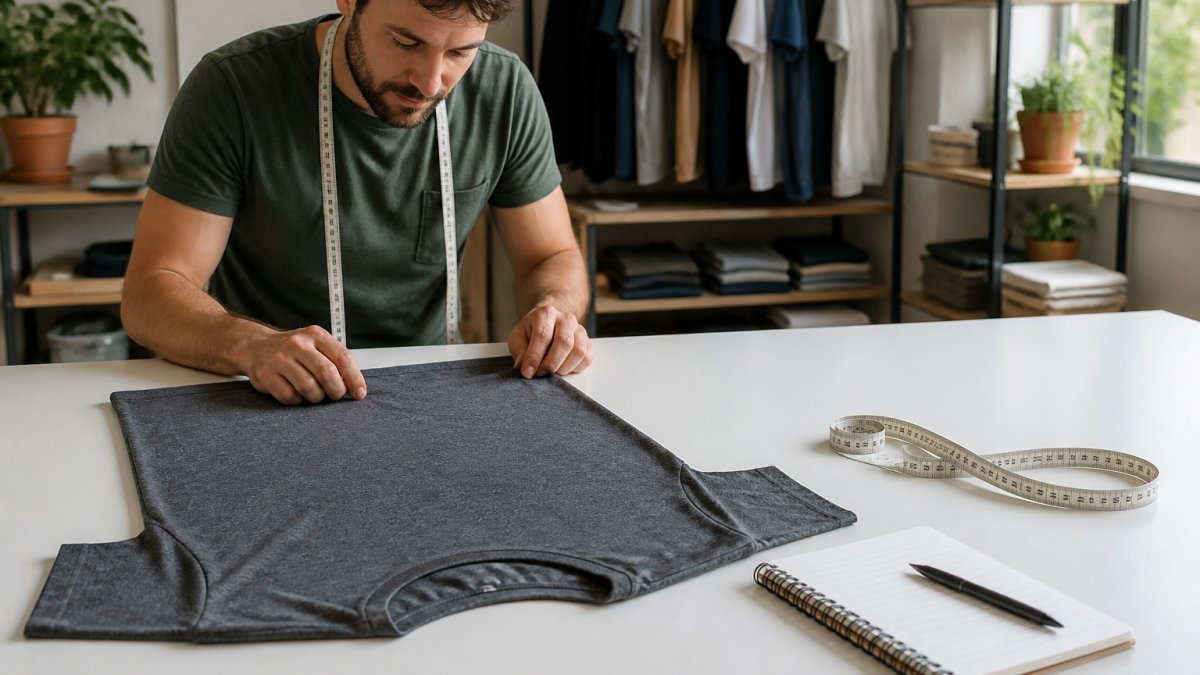
You don't need expensive equipment to measure yourself properly. A soft tape measure is your most important tool, it bends easily around your body and gives accurate readings. A regular sewing or tailoring tape measure works best because it won't slip or bunch up like a rigid ruler would.
Beyond the tape measure, gather these simple items:
- A soft fabric tape measure (not a metal one)
- A notebook or phone to write down your measurements
- A pen or pencil
- A well-fitting shirt you already own
- A mirror (helpful but not required)
- Comfortable clothing that doesn't restrict movement
The best time to measure is when you're wearing light clothing, a t-shirt and pants work well. Avoid measuring over heavy sweaters or jackets, as they add bulk that throws off your numbers. Stand in front of a mirror if possible so you can check your posture and ensure the tape sits flat against your body.
How to Measure Chest for Shirt Size
Your chest measurement is one of the most important numbers when buying shirts. This measurement determines whether the shirt will feel comfortable across your shoulders, back, and front.
Here's how to measure your chest accurately:
- Wear a light t-shirt or no shirt at all
- Stand straight with your arms relaxed at your sides
- Wrap the tape measure around the fullest part of your chest
- Keep the tape snug but not tight, you should be able to slip one finger underneath
- Take the measurement at the end of a normal breath, not while you're holding your breath in or pushing out (How do respiratory state and measurement method affect bra size calculations?)
- Write down the number
The chest measurement should go around the widest part of your torso. For most people, this is just below the armpits. If you're measuring over a shirt, make sure it's a thin, fitted one that doesn't add extra inches.
A common mistake is pulling the tape too tight. This gives you a measurement that's smaller than reality, and the shirt will feel snug when it arrives. The tape should sit flat and comfortable against your skin, with just enough room to move slightly.
Measuring Neck Circumference and Collar Fit
Your neck measurement determines your collar size, which is critical for comfort. A collar that's too tight restricts movement and feels uncomfortable. One that's too loose looks sloppy and won't keep the shirt in place properly.
Follow these steps to measure your neck:
- Stand with your head level and looking straight ahead
- Wrap the tape measure around the base of your neck
- Keep the tape parallel to the ground
- Leave enough room to slip one finger comfortably between the tape and your neck
- Note the measurement in inches
For everyday comfort, your neck measurement should allow that one-finger space. This gives you room to move, bend, and breathe without the collar feeling restrictive. If you're measuring for formal dress shirts, some people prefer a slightly snugger fit, but this depends on personal preference.
Many people measure their neck too tightly. Remember, you'll be wearing this shirt for hours at a time. A collar with proper breathing room makes a significant difference in how the shirt feels throughout your day.
How to Measure Sleeve Length
Sleeve length affects both comfort and appearance. Sleeves that are too short look awkward and restrict arm movement. Sleeves that are too long bunch up at your wrists and get in the way when you're working or moving around.
There are two reliable ways to measure sleeve length: measuring your own arm, or measuring the sleeve on a shirt that already fits you well.
Measuring your own arm:
- Stand with your arms relaxed at your sides
- Have someone help you, or use a mirror to check your positioning
- Starting at the center back of your neck, measure along your shoulder seam
- Continue down your arm to your wrist bone
- The tape should follow the natural line of your arm, not cut across it
- Stop at the wrist bone where your hand begins
Alternatively, you can measure from the center of your back. Find the midpoint between your shoulder blades, then measure down your arm to your wrist. Both methods work; the key is consistency.
Measuring sleeve length on an existing shirt (often more accurate):
If you own a shirt that fits you well in the sleeves, this method removes the guesswork. Lay the shirt flat on a clean surface, button it up, and smooth out any wrinkles. Measure from the center back neck seam (where the collar attaches at the back) straight down the sleeve to the cuff edge. This gives you the exact sleeve length that works for your body.
Understanding proper sleeve fit:
For a proper fit, your sleeve should end at your wrist bone. When your arms are at your sides, the cuff should sit right where your hand begins. This length allows your wrist to move freely and looks proportional to your body. If you're buying dress shirts, the cuff should sit about a half-inch above your wrist bone so it doesn't cover your watch or extend past your hand when your arm is extended.
Comfortable Everyday Shirts for Men: Measuring Torso and Waist
Your torso length and waist measurement ensure the shirt drapes properly on your body. A shirt that's too short will ride up when you move. One that's too long will bunch at your waist and look oversized.
Measuring torso length:
- Stand straight with your arms at your sides
- Measure from the top of your shoulder (where the shoulder seam sits) straight down to your hip bone
- This gives you your torso length
- For a comfortable fit, your shirt should end around mid-hip
Measuring waist:
- Locate the narrowest part of your torso, usually just above your hip bones
- Wrap the tape measure around this area
- Keep the tape parallel to the ground and snug but not tight
- You should be able to fit one or two fingers between the tape and your body
For comfortable everyday shirts, a slightly relaxed fit around the waist is better than a tight one. This allows you to move, bend, and sit without feeling restricted. Knowing your waist measurement helps you choose a size that feels good throughout your day.
Body Measurements vs. Garment Measurements: Understanding the Difference
This is where many people get confused. Your body measurements and garment measurements are not the same thing. Understanding the difference helps you choose the right size every time.
Body measurements are the actual measurements of your body, your chest, neck, sleeve length, and waist. These are what you take when you measure yourself using the steps above.
Garment measurements are the dimensions of the actual shirt. A shirt's chest measurement might be 2-4 inches larger than your body measurement to allow for comfortable movement. This extra space is called "ease" or "wearing ease."
For example, if your body chest measurement is 38 inches, a medium shirt might have a chest measurement of 40-42 inches. That extra 2-4 inches allows the shirt to fit comfortably without being tight.
Different shirt styles have different amounts of ease. A fitted dress shirt has less ease than a casual t-shirt. A relaxed-fit shirt has more ease than a slim-fit version. When you're shopping, compare your body measurements to the garment measurements provided, not to standard sizing charts.
Many online retailers provide garment measurements for each size. Before you order, compare those numbers to your own measurements. This is far more reliable than guessing based on the size label alone.
Common Mistakes to Avoid When Measuring
Understanding what not to do is just as important as knowing the right technique. These mistakes happen often, and they lead to poor-fitting shirts.
Pulling the tape too tight is the most common error. This makes your measurements smaller than they actually are.
Measuring over thick clothing adds inches that don't belong. A heavy sweater or jacket throws off every measurement.
Taking measurements while holding your breath gives false numbers. Your chest expands when you breathe in and contracts when you breathe out.
Not standing straight changes your measurements significantly. Slouching makes your torso appear shorter and your chest smaller.
Forgetting to write things down means you'll have to measure again later. Keep a record of your measurements in your phone or a notebook.
Comparing yourself to standard sizing charts without checking garment measurements leads to disappointment. Sizing varies between brands and styles.
Troubleshooting fit problems after you receive your shirt:
Even with accurate measurements, fit issues sometimes occur. Understanding what went wrong helps you make better choices next time.
Collar gap (space between collar and neck): This usually means the collar is too large.
Sleeves that bunch or wrinkle at the wrist: Your sleeve measurement was likely too long, or the shirt's armhole is cut too large.
Shirt riding up or appearing too short: Your torso measurement may have been underestimated, or you chose a shirt with a shorter cut.
Frequently Asked Questions
Should I measure my body or an existing shirt for the best fit?
Measure your body when ordering new shirts, especially if you're trying a new brand. Use an existing well-fitting shirt as a template only when comparing garment dimensions to ensure consistency. Body measurements give you a baseline; garment measurements show you what the actual shirt will feel like. For best results, take both, your body measurements tell you your size, while measuring a shirt you already love helps you match that fit in new purchases.
How do I measure my chest for a shirt?
Wrap a soft tape measure around the fullest part of your chest, keeping it snug but not tight. Stand straight with your arms relaxed at your sides. The tape should sit parallel to the ground. Take the measurement at the end of a normal exhale, not while holding your breath or after inhaling deeply. Most shirts fit best with 2 to 4 inches of ease, meaning the shirt's chest width should be 2 to 4 inches larger than your actual chest measurement for comfortable everyday wear.
How do I measure sleeve length accurately?
Start at the center back of your neck, measure across your shoulder seam to your wrist bone with your arm bent at a 90-degree angle. Alternatively, measure from the middle of your back neck, down your arm to your wrist while standing naturally. Sleeve length should end at or just above your wrist bone when your arms hang at your sides. This measurement is critical for shirts that fit well through the shoulders and don't bunch at the wrists or extend too far past them.
What is the difference between a slim fit and a regular fit shirt?
Regular fit shirts offer more room through the chest, waist, and torso, typically with 3 to 4 inches of ease for comfortable, relaxed movement. Slim fit shirts are more tapered and closer to the body, usually with 1 to 2 inches of ease for a more streamlined look. Choose regular fit if you prefer unrestricted movement and comfort; choose slim fit if you want a more tailored appearance. Your body measurements stay the same, the difference is in how much extra fabric the shirt includes.
Getting the perfect fit starts with accurate measurements. When you know your body measurements and understand how to compare them to garment dimensions, shopping for shirts becomes straightforward. Shine Bright Shirts makes this easier by providing detailed garment measurements for every piece. Take your time with these measurements, write them down, and you'll find that shirts fit the way they should, comfortable, flattering, and ready to wear.