

Table of Contents
- Quick Comparison: Best Graphic Tees for Athletic Builds
- How We Evaluated These Graphic Tees
- Athletic Fit T-Shirt Sizing Guide for Muscular Frames
- Best Fabric Blends for Muscular Men Who Train Hard
- Top Picks: Graphic Tees Built for Athletic Builds
- How to Style Graphic Tees for Gym and Casual Wear
- Graphic Durability: What Happens After 50 Washes
- Frequently Asked Questions
Last Updated: September 13, 2026
Quick Comparison: Best Graphic Tees for Athletic Builds
Finding the best graphic tees for athletic builds comes down to one problem: most shirts are cut for a frame that doesn't train. A standard crew neck assumes narrow shoulders and a straight torso, so a V-taper ends up with a shirt that pulls at the chest and billows at the waist.
The fix is measurable: know your shoulder-to-waist ratio and check three construction details.
Here's how the options stack up:
| Tee | Price | Fabric | Best For |
|---|---|---|---|
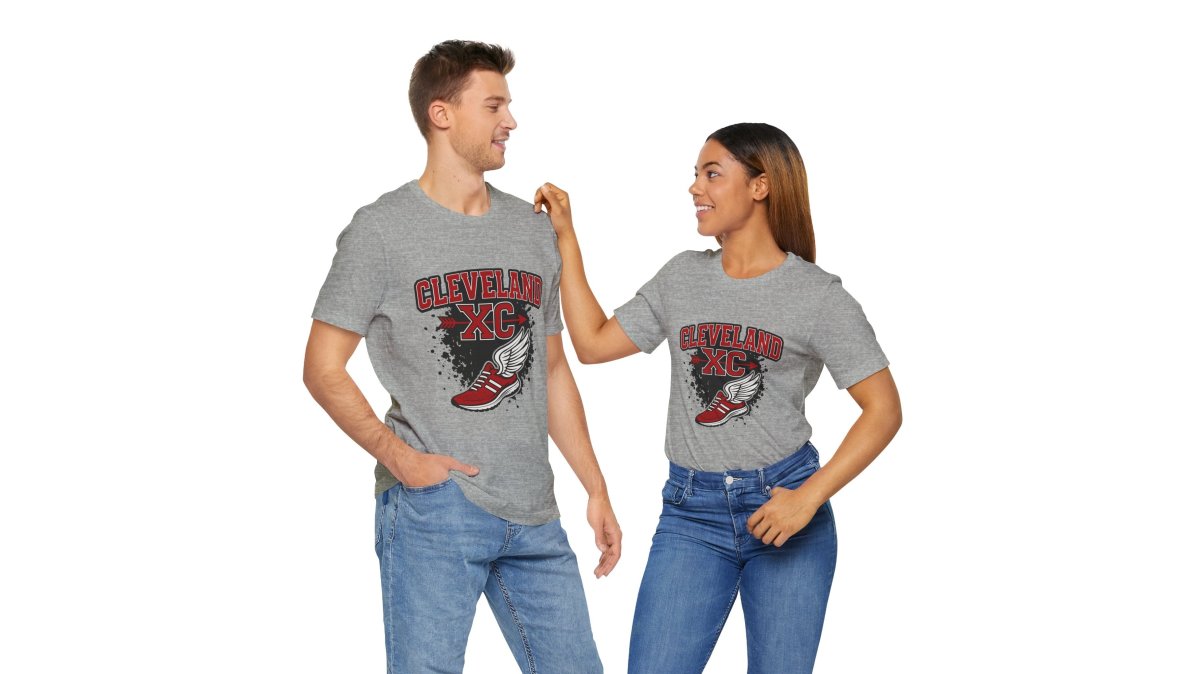
| Cleveland Cross Country Adult Tee | $20.00 | Cotton blend, crew neck | Team spirit and everyday wear |
| Cleveland Cross Country T-Shirt | $18.00 | Cotton, crew neck | Value pick for training days |
| Cleveland Girls Flag Football Adult Sports T-Shirt | $20.00 | Cotton, crew neck | Game day and booster support |
| Punch Warrior T-Shirt | $14.00 | Cotton, crew neck | Budget graphic with attitude |
| Team Punch | $16.00 | Cotton, crew neck | Casual streetwear look |
| Elephant Strength Tee | $22.99 | DTG print, crew neck | Statement graphics |
| Elephant Strength V-Neck Tee | $22.99 | Cotton, V-neck | Broad shoulders, open neckline |
| Gorilla Heart V-Neck Tee | $22.99 | Cotton, V-neck | V-neck fans who want softness |
| Panda Joy Tee | $22.99 | Fitted short sleeve | Lightweight everyday comfort |
| Colonoscopy Clinic Humor T-Shirt | $14.00 | Airlume combed cotton | Humor and layering |
How We Evaluated These Graphic Tees
We judged every shirt on four things: how the shoulders and armholes sit on a broader frame, how the fabric handles sweat and washing, how the graphic holds up, and whether the price makes sense.

Fit came first. A graphic tee can have the best print in the world, but if the armhole cuts into your armpit or the hem drapes past your hips, you won't wear it. We looked at drape, taper, and how each shirt behaves after a few dryer cycles.
Fabric came second. Cotton-blend and performance fabric behave differently, and the right choice depends on whether you're lifting or grabbing coffee.
Print quality came third. Whether a print survives fifty washes or cracks at twenty comes down to ink penetration and fabric weight.
Textile Exchange materials market report notes that fiber choice affects both how a garment feels and how long it lasts, which is why fabric weight matters more than most buyers realize.
Athletic Fit T-Shirt Sizing Guide for Muscular Frames
An athletic fit t-shirt sizing guide starts with two numbers: your chest and your natural waist. The gap tells you how much taper you need. If your chest is six inches larger than your waist, a straight-cut shirt will hang off your midsection like a curtain.
Most brands publish a single chest measurement and call it "athletic fit." That's not enough. You need shoulder width, chest, waist, and shirt length. Measure a shirt you already like, lay it flat, and compare those four numbers to the size chart.
Shoulder and Chest Measurements That Matter
Shoulder seam placement decides whether a shirt looks tailored or borrowed. On a muscular build, the seam should land at the edge of your shoulder bone, not halfway down your arm. Past that point, the shirt looks slouchy no matter how good the print is.
Chest measurement is the second checkpoint. A well-fitted graphic tee should sit close to your chest without pulling or stretching the print. If you can pinch more than an inch of loose fabric on each side, size down. If the fabric ripples across your chest, size up or find a cut with more armhole room.
Tapered Waist vs. Straight Cut
A tapered waist follows your torso and gives you a V-taper silhouette. A straight cut drops from chest to hem with no shaping, which suits leaner frames but looks boxy on anyone with a developed back and shoulders.
For athletic builds, tapered wins almost every time. The exception is layering under a jacket or hoodie, where a slightly straighter cut gives you room to move.
Visual Sizing Guide: How a Tee Drapes on Different Athletic Builds
How a shirt falls depends on whether you carry your mass in your shoulders and lats (a V-taper build) or through your chest, core, and hips (a powerlifter build). Here is how to read the drape on each.
V-taper build (wide shoulders, narrow waist). The shoulder seams should sit at the outer edge of your deltoids, the chest should be filled without horizontal pull lines, and the fabric should narrow gradually from armpit to hem. Side seams should run roughly parallel to your torso rather than flaring outward. If the hem flares away from your hips, the shirt is cut too straight for your ratio. If the chest pulls into stress wrinkles from the armpit, the shirt is too small through the chest even if the waist fits.
Powerlifter or strongman build (thick chest, full core, wider hips). Here the priority flips. You want a shirt that does not taper aggressively, because a strong taper clings at the midsection and rides up every time you reach overhead. Look for a straighter side seam with a slightly longer body length. The shoulder seam should still land at the shoulder bone, but you have more tolerance for a relaxed chest because your frame fills it naturally.
Lean athletic build (visible taper, lower overall mass). You can wear either cut, but a moderate taper gives the cleanest silhouette. Avoid oversized straight cuts, which swallow a leaner frame and make the graphic look like it is floating.
How to Measure a Shirt You Already Own
This method accounts for how fabric drapes on a body, not just raw dimensions.
- Lay your best-fitting shirt flat and smooth out the wrinkles.
- Measure armpit to armpit across the chest, then double it. This is your target chest width.
- Measure from the top of the shoulder seam straight down to the hem. This is your target body length.
- Measure across the waist, about six inches up from the hem, then double it. This is your target waist width.
- Measure shoulder seam to shoulder seam across the top. This is your target shoulder width.
Write those four numbers down and compare them to the size chart before you look at the graphic. A shirt that matches your numbers in a plain design will match them in a printed one, assuming the same cut.
Sizing Considerations for Muscular Builds
A few patterns hold across most athletic frames. If you are between sizes, size up for training and stay true to size for casual wear, because a shirt that fits at rest feels restrictive once your lats and shoulders are pumped. If you have a long torso, check the body length; many athletic cuts run short to avoid excess fabric at the waist, which leaves taller lifters with a shirt that rides up. If your shoulders are disproportionately wide relative to your chest, prioritize shoulder width, since a tight shoulder seam is far more uncomfortable than a slightly relaxed chest.
Best Fabric Blends for Muscular Men Who Train Hard
The best fabric blends for muscular men balance stretch, breathability, and shrinkage resistance. Pure cotton feels great but moves less and can shrink after the first wash. A cotton-blend with a little elastane gives you four-way stretch without losing the soft hand feel.
Performance fabric, usually a polyester blend, wicks moisture and dries fast. It's the better pick for high-intensity training, hot gyms, and anyone who sweats heavily. The tradeoff is that some performance fabrics feel slick and hold odors without anti-odor treatment.
Cotton-Blend vs. Performance Fabric
Cotton-blend shirts win for casual wear, streetwear looks, and anything where the graphic is the point. They take direct-to-garment printing well, hold color, and feel soft against the skin. Look for a fabric weight around 4.5 to 5.5 ounces for a shirt that drapes well without feeling heavy.
Performance fabric wins for training. It handles moisture-wicking and quick-dry demands that cotton can't match, and it holds its shape through repeated washes. If you train five days a week, a couple of performance shirts in rotation will outlast a stack of cotton tees.
A practical middle ground: keep cotton-blend for daily wear and performance fabric for the gym.
Top Picks: Graphic Tees Built for Athletic Builds
Our top pick overall is the Cleveland Cross Country Adult Tee at $20.00. It combines a crew neck that sits properly on broader shoulders with a cotton-blend fabric that drapes well, and five dollars from every sale goes to the Cleveland XC Boosters. The armhole placement allows full range of motion without gaping.
If you want a V-neck, the Elephant Strength V-Neck Tee at $22.99 opens up the neckline and flatters a broader chest. The Gorilla Heart V-Neck Tee at the same price offers the same cut with a different graphic, and both use cotton that feels soft from the first wear. V-necks work especially well for guys whose shoulders make a crew neck feel tight.

For a budget graphic with real attitude, the Punch Warrior T-Shirt at $14.00 and Team Punch at $16.00 both deliver. The Colonoscopy Clinic Humor T-Shirt at $14.00 uses Airlume combed cotton, a finer, smoother yarn than standard cotton, and layers easily under a jacket. The Panda Joy Tee at $22.99 is the lightest of the group, a fitted short sleeve for warm-weather training.
Two value picks round out the list: the Cleveland Cross Country T-Shirt at $18.00 and the Cleveland Girls Flag Football Adult Sports T-Shirt at $20.00, which also sends five dollars per sale to the Cleveland Flag Football Boosters. Both use a regular fit with a cotton crew neck that suits a range of body types.
How to Style Graphic Tees for Gym and Casual Wear
Styling graphic tees for gym and casual wear comes down to fit and contrast. A fitted graphic tee with joggers or tapered sweatpants reads athletic. The same shirt with straight-leg jeans and clean sneakers reads streetwear. The shirt doesn't change; the silhouette around it does.
For the gym, keep the hem at hip level. A shirt that runs long will bunch up during overhead presses and deadlifts. If you're between sizes, size down for training and stay true to size for casual wear.
For casual looks, layer a graphic tee under an open flannel or denim jacket. The graphic becomes an accent rather than the whole outfit. Keep the rest simple: one graphic, neutral bottoms, and shoes that match the shirt's color palette.
Graphic Durability: What Happens After 50 Washes
Most guides tell you to wash inside out and skip the dryer, then stop there. That advice is correct but incomplete. To predict how long a graphic will last, you need to understand what breaks a print down, how print methods differ, and what a realistic wear timeline looks like.
What Actually Breaks a Graphic Print
Three forces destroy prints, and they compound each other.
Heat. High dryer temperatures cause the fabric to expand and contract while the ink layer stays rigid. That mismatch produces the fine spiderweb cracks you see across an old print.
Mechanical abrasion. Tumbling against towels, jeans, and zippers scuffs the ink surface. Over dozens of cycles, the print dulls and turns chalky before it cracks.
Chemical stress. Chlorine bleach, fabric softener, and some stain treatments degrade the binder that holds pigment to fabric. Softener leaves a waxy residue that can lift print edges over time.
How Print Methods Compare for Longevity
Direct-to-garment (DTG). Ink is jetted onto the garment and bonded into the fibers. On heavier fabric, DTG prints sit deeper and survive washing better than on a thin one. DTG detail can soften over many washes, and prints on dark garments often require a pretreatment that affects hand feel.
Screen printing. Ink is pushed through a mesh screen and cured. Plastisol screen prints are thick and durable but can crack if the fabric stretches underneath them, a real concern on a shirt worn over a muscular chest and shoulders. Water-based screen prints sit thinner, feel softer, and fade gradually rather than crack.
Heat-transfer and vinyl. A printed film is pressed onto the fabric. These look crisp initially but are the most prone to peeling at the edges, especially on stretchy performance fabrics.
A Realistic Wear Timeline
Assuming a shirt is worn once a week and washed after each wear, here is a common pattern:
- Washes 1 to 10: Print looks new. Any manufacturing defect, such as a misaligned edge or a weak bond, will usually show up here.
- Washes 10 to 30: Slight softening of the print surface. Colors may look marginally less saturated, especially on darker garments. No structural failure yet.
- Washes 30 to 50: First visible cracking or fading on lower-quality prints, particularly at stress points like the chest and shoulder blades. Well-made DTG and water-based screen prints typically still look good here.
- Washes 50 and beyond: Longevity depends almost entirely on fabric weight and wash habits. A heavier fabric with a properly cured print can hold up for well over a hundred washes if washed cold and air-dried. A thin fabric with a heat-transfer print may be visibly worn by this point.
How to Test a Print Before You Commit
You cannot run fifty washes in the store, but you can check a few things in person or from product photos.
- Feel the print. A print that feels like a thick plastic sheet is more likely to crack than one that feels nearly flush with the fabric.
- Stretch the fabric gently. If the print resists the stretch and you can see the ink separating from the weave, it will fail faster on a muscular frame.
- Check the fabric weight. Heavier fabrics hold prints better because there is more fiber for the ink to bond into. A shirt in the 4.5 to 5.5 ounce range is a reasonable baseline.
- Look at the care label. A garment that recommends cold wash and low tumble dry is usually built with print longevity in mind.
Seam Construction and Long-Term Wear
Seam construction matters too. Flatlock seams lie flatter against the skin and resist the stress of pulling a shirt over a broader chest and shoulders. Sturdy side seams and a tear-away label, like the one on the Colonoscopy Clinic Humor T-Shirt, reduce the friction points that cause a shirt to wear out early.

Shrinkage Resistance
Shrinkage resistance is the other long-term factor. Cotton shirts that aren't pre-shrunk can lose length after the first wash (the FTC). Buying a cotton-blend or checking the care instructions saves you from a shirt that fits on day one and rides up by week three. A shrinking shirt also stresses the print, because the fabric contracts while the ink layer does not, which is one more reason a pre-shrunk or blended fabric keeps its graphic looking sharp longer.
Frequently Asked Questions
What are the best t-shirts for an athletic build?
The best graphic tees for athletic builds feature a tapered waist, roomy chest and shoulders, and four-way stretch fabric. Look for cotton-blend or performance fabric with flatlock seams that reduce chafing. A crew neck with a slightly wider armhole prevents tightness across the lats. Shine Bright Shirts offers several options in this category, including the Elephant Strength Tee at $22.99, which uses a soft cotton blend that moves with your frame without looking baggy.
How should a graphic tee fit on a muscular frame?
A graphic tee should skim your chest and shoulders without pulling at the seams. The hem should hit mid-hip, and the waist should taper slightly to avoid a boxy silhouette. If the shirt bunches at the waist or restricts your range of motion, size up and look for a tapered cut. An athletic fit t-shirt sizing guide can help you match your chest measurement to the right size, especially if your shoulders are more than 10 inches wider than your waist.
What fabric blends work best for muscular men who sweat a lot?
Cotton-polyester blends with moisture-wicking properties work well for muscular men who train hard. Four-way stretch fabrics with anti-odor treatment help during high-intensity training. For casual wear, a cotton blend holds its shape and resists shrinkage. Avoid 100% cotton if you want minimal shrinkage and faster drying after workouts.
How do I keep graphic prints from cracking after a few washes?
Wash graphic tees inside out in cold water and tumble dry on low heat or hang dry. Direct heat breaks down the print adhesive, causing cracks. Avoid ironing directly on the graphic. A quality DTG print on a cotton-blend shirt can last 50 or more washes if you follow these steps. Shine Bright Shirts uses DTG printing on several tees, including the Punch Warrior T-Shirt at $14.00, which holds up well with proper care.
Can I wear graphic tees for both gym sessions and casual outings?
Yes, if you choose the right fabric and fit. A moisture-wicking cotton-blend tee with a tapered waist works for both. For the gym, pair it with athletic shorts and training shoes. For casual wear, layer it under a denim jacket or wear it with chinos and sneakers. The key is picking a shirt that does not look like gym-only gear. A clean graphic design on a fitted tee transitions easily from a workout to a coffee shop without looking out of place.