

Table of Contents
- Understanding Why Graphic Tees Print Cracks
- How to Wash Graphic Tees Correctly
- Drying Methods That Prevent Cracking
- How to Fix Cracked Screen Print
- Long-Term Storage and Preventative Care
- Common Mistakes to Avoid
- Conclusion
- Frequently Asked Questions
Last Updated: September 22, 2026
Understanding Why Graphic Tees Print Cracks
Graphic tees print cracks happen for one simple reason: the ink layer loses flexibility over time. When fabric stretches during wear and washing, the print can't move with it. The ink becomes brittle and splits.
The good news is that understanding why this happens makes it preventable.
Print quality varies dramatically depending on the printing method used. Some inks are engineered to stay flexible; others crack within weeks.
Screen printing vs. direct-to-garment printing
Screen printing uses plastisol ink that cures through heat and becomes a solid layer. When done correctly, it lasts for years because the ink bonds to fabric fibers while maintaining flexibility.
Direct-to-garment (DTG) printing sprays ink directly onto the shirt like an inkjet printer. The ink soaks into the fabric, making prints feel softer and look more detailed, but they're more prone to cracking without proper care.
Heat transfer printing applies a pre-made design using heat and pressure, creating a plastic-like layer that doesn't flex well with fabric and cracks faster than screen or DTG prints.
The method matters because it determines how the ink behaves when the shirt is stretched, washed, and dried.
How ink quality affects durability
Premium plastisol inks contain additives that keep them flexible after repeated washing, while cheaper inks become rigid quickly.
The difference shows up within the first few washes: quality ink maintains appearance while low-grade ink starts showing cracks.
Curing also plays a role. If the curing temperature is too low or the time too short, the ink never fully sets and remains prone to cracking. Professional printers control this carefully; small operations sometimes cut corners.
How to Wash Graphic Tees Correctly
The way you wash graphic tees determines how long the print lasts. Most people wash them like regular clothes, which is the mistake.
Graphic tees need gentler treatment because the ink layer is delicate, and proper washing takes no extra time or money.
Choosing the right water temperature and cycle
Use cold water; hot water breaks down ink bonds faster.
Use the delicate or gentle cycle on your washing machine. This setting uses less agitation, which means less stress on the print. Regular cycles tumble clothes more violently and put more pressure on the graphic.
Here's what to do:
- Fill the machine with cold water
- Select the delicate or gentle cycle
- Add regular detergent (any brand works fine)
- Avoid bleach and fabric softener
- Wash with similar colors to prevent dye transfer
Cold water keeps the ink stable, while hot water causes fibers to expand and contract, stressing the print layer.
Delicate cycles spin slower and use less mechanical action, protecting the graphic while still cleaning the shirt.
Turning shirts inside out and using gentle detergent
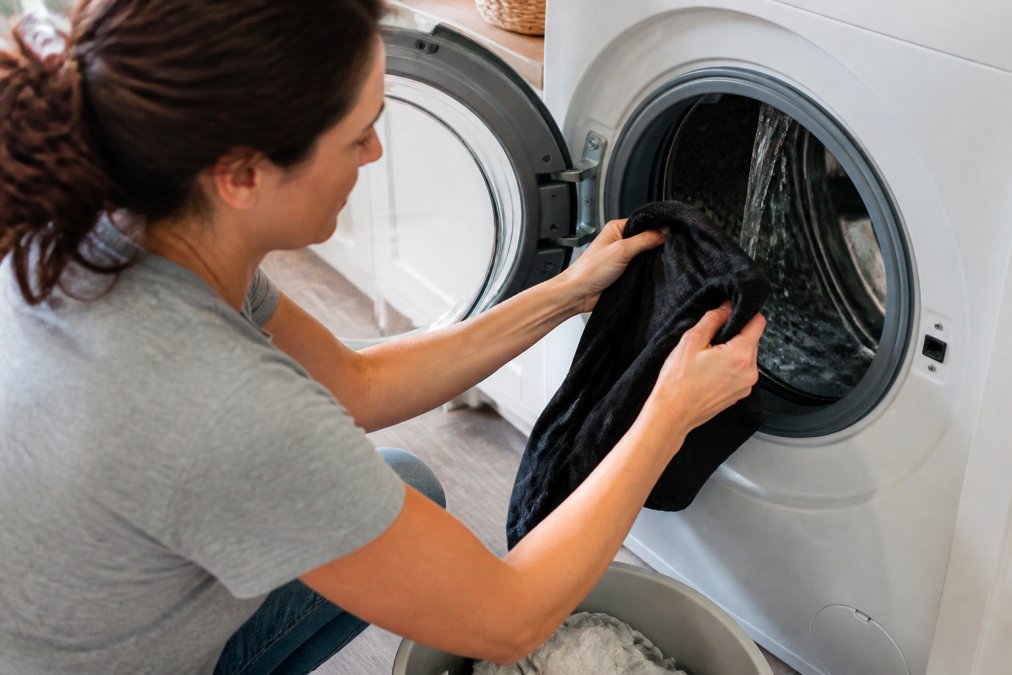
Turn the shirt inside out before washing to protect the graphic from direct friction with other clothes and the machine drum.
When turned inside out, the blank back takes wear and tear instead of the print, the single most effective prevention step.
Use regular laundry detergent; avoid heavy-duty formulas designed for tough stains, as they contain harsher chemicals.
Here's the step-by-step process:
- Turn the shirt inside out
- Place it in a mesh laundry bag if you have one (optional but helpful)
- Add detergent to the dispenser
- Run the cold water, delicate cycle
- Remove immediately after the cycle ends
- Don't let wet clothes sit in the machine
A mesh bag adds another layer of protection by reducing direct contact between the shirt and the machine drum, especially useful for front-loading machines.
Drying Methods That Prevent Cracking
How you dry a graphic tee matters as much as how you wash it. Heat is the enemy of printed designs and causes ink to become brittle and crack.
Air drying versus tumble drying
Air drying is the best option. Hang the shirt on a clothesline or lay it flat to dry at room temperature; this takes longer but causes zero damage to the print.
Tumble drying with heat damages graphic tees by causing the ink to contract and fabric to expand unevenly. If you must use a dryer, use the lowest heat setting or air-only setting.
The difference is significant:
| Drying Method | Heat Exposure | Print Risk | Time Required |
|---|---|---|---|
| Air drying (hanging) | None | Very low | 4-8 hours |
| Air drying (flat) | None | Very low | 6-12 hours |
| Dryer on low heat | Minimal | Low | 30-45 minutes |
| Dryer on medium heat | Moderate | Moderate | 20-30 minutes |
| Dryer on high heat | High | High | 15-25 minutes |
Air drying takes patience but preserves the print longer. If you must use a dryer, use the lowest heat setting; never use high heat.
Lay the shirt flat to dry if possible, as hanging can stretch wet, heavy fabric. Flat drying prevents stretching and keeps the print in better condition.
How to Fix Cracked Screen Print
If your graphic tee has cracked print, repair options depend on the print type, damage severity, and the shirt's sentimental value. Not all cracks are repairable, and not all repairs are worth the effort.
Understanding why the print cracked is the first step. Screen-printed graphics crack from improper curing, low-quality ink, or heat exposure. DTG prints crack from uneven ink penetration or fabric stretching during printing. Heat transfer vinyl cracks from weakened adhesive bonds due to high heat or aggressive washing. Each type requires a different repair approach.
For minor cracks in screen-printed graphics, small hairline splits can be sealed with fabric glue or clear nail polish to prevent spreading and improve appearance.
Here is the process:
- Clean the area around the crack with a dry cloth to remove any lint or debris
- Apply a thin layer of fabric glue or clear nail polish along the crack using a small brush or toothpick
- Work the adhesive into the crack so it fills the gap
- Allow it to dry completely according to the product instructions (typically 2 to 4 hours for fabric glue, 15 to 30 minutes for nail polish)
- Once dry, gently flex the area to test whether the crack is sealed
- Avoid washing the shirt for at least 24 hours after repair
Fabric glue is preferable because it remains flexible after drying, while nail polish can feel stiff and crack again. Both are temporary solutions that extend the shirt's life but do not restore the print.
Another option is a fabric patch glued to the inside of the shirt over the cracked area. This reinforces the print from behind, prevents spreading, and adds structural support without being visible when wearing the shirt.
For cracks in DTG prints, household repairs are less effective because the ink has penetrated fabric fibers. Small cracks may slow deterioration, but significant cracks require professional intervention.
For cracks in heat transfer vinyl, if the vinyl is peeling, re-adhere it using a household iron on low to medium heat for 10 to 15 seconds with a cloth barrier. If the vinyl is cracked but adhered, household repair is not practical and the vinyl will need replacement.
When to seek professional restoration depends on the shirt's value and damage extent. Professional shops can repair by re-printing over the cracked area or remove the old print and apply a new graphic.
Repair makes sense if the shirt has sentimental value, the graphic is high-quality, damage is limited to a small area, and you wear it regularly.
Replacement makes sense if the shirt is a casual mass-retailer tee, multiple areas are cracked, it is inexpensive, or damage exceeds 25 percent of the graphic.
Professional restoration costs vary by design complexity and damage extent. For inexpensive shirts, professional restoration is rarely economical; for vintage or irreplaceable shirts, it is often worth the investment.
Preventing future cracks is more practical than repairing them. Repairing the crack does not fix the root problem, and the print may crack again if you continue the same washing and drying practices.
After repairing a cracked print, adjust your care routine: wash in cold water on the delicate cycle, turn the shirt inside out, air dry, and vary how you fold. These changes reduce stress and slow deterioration.
If a shirt has cracked once, it is more likely to crack again.
Long-Term Storage and Preventative Care
How you store graphic tees affects how long the print lasts. Proper storage prevents unnecessary damage during the months when you're not wearing them.
Common Mistakes to Avoid
Washing in hot water. This is the most common mistake. Hot water weakens the ink bond and makes the print more brittle. Always use cold water.
Conclusion
Graphic tees print cracks because the ink layer loses flexibility under stress from washing, drying, and wear. The good news is that cracking is preventable with proper care.
Frequently Asked Questions
What causes graphic tees print to crack in the first place?
Graphic tees print cracks due to a combination of factors: mechanical stress from washing agitation, heat exposure during drying, incompatibility between ink type and fabric, and poor ink curing during manufacturing. Fiber stress from shrinkage and repeated flexing of the fabric also contributes. Understanding your shirt's print method helps you care for it appropriately.
How do I know if my graphic tees are screen printed or direct to garment?
Check the tag or product description when you purchase.
Can I repair a cracked graphic tee myself?
Yes, minor cracks can be repaired at home using fabric glue, iron-on patches, or specialized fabric markers designed for textile repair. For small surface cracks in screen printing, you can carefully apply a thin layer of flexible fabric adhesive and let it cure. However, deep cracks that extend through the ink layer or affect large areas are difficult to repair permanently at home. Professional restoration services can re-screen or apply new prints, but this is more costly than prevention.
Does heat really cause graphic tees to crack?
Yes, heat is a major factor in print cracking. High temperatures cause both the ink and fabric fibers to expand and contract, creating stress on the print layer. Machine drying with high heat accelerates polymer degradation and increases fiber shrinkage. Air drying at room temperature is significantly gentler on graphic tees. If you must use a dryer, use low heat or the air-only setting. Heat damage compounds over time, so consistent low-temperature care extends print durability considerably.